

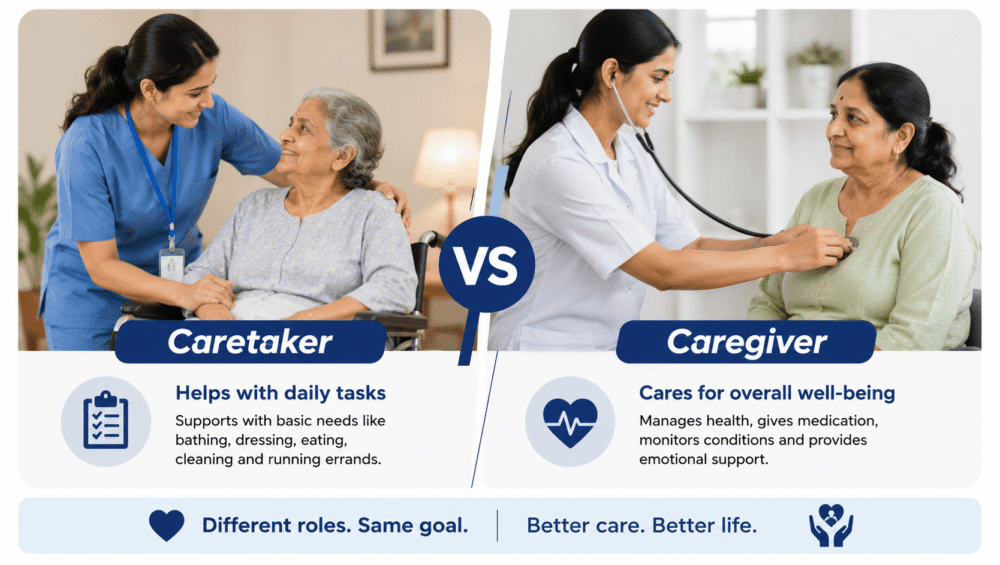
In India’s evolving healthcare landscape, families often face confusion when it comes to choosing the right kind of support for their loved ones. Terms like caregiver, caretaker, and even care counselor are frequently used, but they do not always mean the same thing. While both caregivers and caretakers are essential in ensuring the well-being of individuals, their responsibilities, training levels, and emotional involvement differ.
Understanding the difference between caregiver and caretaker is crucial, especially for families seeking elderly care, patient recovery support, or assistance for individuals with chronic health conditions. Choosing the wrong type of support may result in unmet needs, whether emotional, physical, or medical. This blog explains the distinction in detail, highlights when to choose one over the other, and how families can make informed decisions.
Defining the Roles: Caregiver vs Caretaker
Caregiver
A caregiver is typically a trained professional or a family member who provides ongoing support to individuals who require assistance with daily living, medical management, or emotional well-being. Caregivers play a holistic role offering not just physical help but also companionship and psychological support.
Roles of a caregiver in elderly care may include:
- Administering prescribed medications and monitoring health vitals
- Supporting mobility, bathing, and dressing
- Providing companionship to reduce feelings of isolation
- Communicating with doctors and family members about the patient’s progress
- Offering emotional comfort and encouragement
Caretaker
On the other hand, a caretaker is often someone who is hired primarily to look after the practical and logistical needs of an individual or property. In India, the word “caretaker” is commonly used in contexts like “house caretaker” or “apartment caretaker.” When applied to healthcare, a caretaker’s role is usually limited to ensuring physical safety and attending to basic needs, without necessarily having medical or emotional care training.
Roles of a caretaker in personal or elder care may include:
- Watching over the patient’s surroundings
- Assisting in household chores such as cleaning or meal preparation
- Ensuring basic safety (e.g., preventing falls for elderly individuals)
- Escorting the individual for errands or hospital visits
- Offering surface-level support, without active emotional engagement
Key Differences: Side-by-Side Comparison
Aspect | Caregiver | Caretaker |
Emotional Role | Provides emotional bonding, companionship, and psychological support. | Primarily ensures physical safety and presence, limited emotional role. |
Training Level | Often trained in healthcare practices, medication handling, and patient care. | May not require formal training; focus is more on supervision or logistics. |
Scope of Work | Covers medical assistance, daily living activities, and emotional needs. | Limited to overseeing safety, chores, or basic routines. |
Cultural Context | In India, increasingly associated with home healthcare and elderly support. | Traditionally used for non-medical watch-and-guard type responsibilities. |
This table clearly highlights why choosing between a caregiver and a caretaker depends heavily on the individual’s requirements.
Caregiver vs Caretaker vs Care Counselor
Apart from caregivers and caretakers, another term that often comes up is care counselor. A care counselor’s role is advisory, they guide families on care strategies, assess patient needs, and recommend the right care plan.
- Caregiver : Provides hands-on care, medical support, and companionship.
- Caretaker : Offers supervision and basic assistance, often without specialized training.
- Care Counselor : Acts as a consultant, helping families design the right care path.
This distinction ensures that families can align resources correctly instead of overlapping roles.
When to Choose Which Role
Opt for a Caregiver if:
- The patient is elderly and has chronic conditions like diabetes, arthritis, or dementia.
- Medical management is required, such as administering medications or monitoring vitals.
- Emotional support and companionship are equally important.
- You need professional intervention at home to reduce frequent hospital visits.
Opt for a Caretaker if:
- The individual requires only supervision, such as preventing falls in seniors.
- Household tasks and errands are the primary support needed.
- Emotional or medical involvement is minimal.
- The family wants cost-effective assistance for basic daily routines.
Professional Help: How CFYI Makes the Choice Easy
In real-life situations, the line between caregiver and caretaker often blurs. Families may not know if their loved one requires medical supervision, emotional bonding, or just logistical help. This is where professional service providers step in.
Organizations like CFYI (Care For You India) specialize in bridging this gap by assessing patient needs and matching them with the right kind of support. Whether it’s a trained caregiver for an elderly parent battling chronic illness, or a caretaker to supervise daily safety at home, such services ensure that families receive reliable and professional assistance.
By focusing on personalized assessments, CFYI makes it easier for families to avoid confusion and choose the right level of care. Their approach ensures that loved ones are not just looked after, but genuinely cared for physically, emotionally, and socially.
Conclusion
The debate of caretaker vs caregiver is not about which role is better—it is about which role is more appropriate for a particular situation. Caregivers bring emotional depth and medical expertise, while caretakers provide essential supervision and basic support. Care counselors add another dimension by guiding families through these choices.
In India, where the demand for home-based healthcare is growing rapidly, making the right decision can ensure better quality of life for seniors, patients, and families alike.
With the right partner, you don’t have to make this choice alone. As families navigate the balance between medical needs and emotional well-being, organizations like CFYI stand ready to provide compassionate, reliable, and professional care at home.
FAQs
- What is the main difference between caregiver and caretaker?
A caregiver provides emotional, medical, and daily living support, while a caretaker focuses primarily on supervision and logistical assistance. - Can one person act as both caregiver and caretaker?
Yes, depending on training and family needs, a caregiver can take on caretaker responsibilities as well. However, not all caretakers can perform caregiver duties since they may lack medical or emotional care training. - What role does a care counselor play?
A care counselor advises families on the best type of care, helping them decide between caregiver, caretaker, or other support services.