
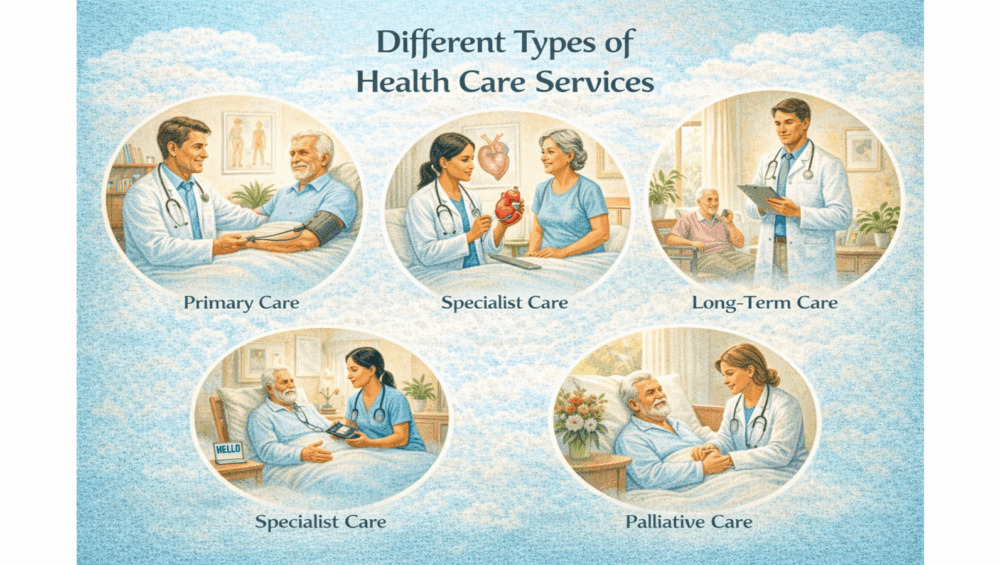
India’s healthcare system is vast and diverse, offering multiple categories of services designed to meet the needs of its large and varied population. From preventive care to specialized treatments, healthcare service types in India are structured to ensure that people can access the right kind of support depending on their condition. Understanding these categories is essential for patients, families, and caregivers to make informed decisions.
Below, we explore the different types of healthcare services in India, with examples and practical insights on when and why they matter.
Primary Health Care Services
Definition:
Primary health care is the first level of contact between individuals and the healthcare system. It focuses on basic and essential medical needs, preventive measures, and general wellness.
Examples:
- Local government health centers (PHCs and sub-centers)
- Community health workers like ASHAs and ANMs
- General practitioners and family doctors
- Immunization programs, maternal and child health services
Why it Matters:
- Provides affordable and accessible care at the grassroots level
- Reduces the burden on higher-level hospitals
- Promotes early detection and prevention of diseases
India has over 1.6 lakh sub-centers and 25,000 PHCs (MoHFW data) that form the backbone of rural health services. For many families, primary care is the first step to addressing common illnesses, getting vaccinations, or accessing maternal healthcare.
Secondary Health Care Services
Definition:
Secondary healthcare provides more advanced medical care than primary centers. These are usually district hospitals or private nursing homes offering specialist consultations and diagnostic services.
Examples:
- District hospitals
- Private multi-specialty nursing homes
- Specialist doctors (gynecologists, pediatricians, orthopedists)
- Diagnostic labs and imaging centers
Common Services:
- Treatment of moderate illnesses and injuries
- Minor surgical procedures
- Emergency stabilization before referral to tertiary care
- In-patient admissions
When to Choose:
Patients are referred to secondary care when primary facilities cannot manage their condition. For instance, a patient with a fracture may be directed from a PHC to a district hospital for an X-ray and orthopedic treatment.
Tertiary Health Care Services
Definition:
Tertiary care is a highly specialized medical service, usually offered at advanced hospitals in urban areas. It deals with complex health issues requiring expert intervention and advanced technology.
Examples:
- AIIMS (All India Institute of Medical Sciences)
- Apollo, Fortis, and Manipal hospitals
- Specialty care in oncology, neurology, cardiology, organ transplants
Services Offered:
- Advanced surgeries (cardiac bypass, neurosurgery)
- Cancer care and chemotherapy
- Intensive care units (ICUs)
- Organ transplantation
Cost & Accessibility Factors:
While tertiary care offers life-saving treatments, affordability and accessibility remain challenges. Most such facilities are concentrated in metro cities, and costs are significantly higher compared to primary or secondary care. Government initiatives like Ayushman Bharat – Pradhan Mantri Jan Arogya Yojana (PMJAY) aim to bridge this gap by covering hospital expenses for low-income families.
Preventive Health Care Services
Purpose:
Preventive healthcare focuses on avoiding disease before it develops. It emphasizes healthy lifestyles, vaccinations, and routine screenings.
Examples:
- Annual health check-ups
- Lifestyle counseling (diet, exercise, smoking cessation)
- Vaccination drives (polio, measles, COVID-19)
- Screening for hypertension, diabetes, and cancer
Key Benefit:
Preventive services reduce the long-term burden on the healthcare system and improve quality of life. For instance, early screening for diabetes can help prevent complications like kidney failure or heart disease.
Palliative & End-of-Life Care Services
Definition:
Palliative care provides comfort and support to patients with life-limiting illnesses. It is not about curing the disease but improving the quality of life for patients and families.
Examples:
- Pain management for cancer patients
- Hospice services for elderly individuals
- Emotional, spiritual, and family counseling
Why it Matters:
With rising rates of chronic and terminal illnesses in India, palliative care ensures dignity and comfort. Unfortunately, access is limited, with only a few states like Kerala offering well-structured programs.
Organizations like CFYI (Care For You India) are making a difference by offering compassionate in-home care solutions, ensuring patients can spend their final days with dignity, surrounded by loved ones.
Home Health Care Services
Services:
Home healthcare has become increasingly important, especially for seniors, post-surgical patients, and individuals with mobility challenges. Services include:
- Skilled nursing care at home
- Physiotherapy and rehabilitation
- Medical equipment rentals (oxygen concentrators, hospital beds)
- Post-discharge monitoring
Advantages:
- Comfort of recovery at home
- Reduced risk of hospital-acquired infections
- Cost savings compared to prolonged hospital stays
- Emotional support from being in a familiar environment
With India’s aging population, home care services are growing rapidly. Providers such as CFYI are bridging the gap by delivering professional care directly to patients’ homes.
Telemedicine & Digital Health Services
Definition:
Telemedicine uses technology to deliver healthcare remotely, reducing the need for physical visits.
Examples:
- Video consultations with doctors
- Online prescription services
- Health apps for monitoring diabetes, hypertension, or pregnancy
- Government platforms like eSanjeevani
Why Choose Telemedicine:
- Accessibility for rural populations
- Convenience for busy urban families
- Affordable consultations without travel costs
- Essential during pandemics like COVID-19
India’s telemedicine market is expected to grow at over 30% annually, driven by smartphone penetration and internet access.
Emergency Medical Services
Examples:
- 108 ambulance service (available in most states)
- Emergency care in hospitals
- Trauma and accident care units
Government Schemes & Critical Role:
- National Health Mission supports emergency transport and maternal care services
- Janani Shishu Suraksha Karyakram (JSSK) ensures free transport for pregnant women
- Ayushman Bharat scheme covers emergency hospitalizations
Critical Role:
Emergency medical services are lifesaving, providing rapid response in accidents, strokes, and cardiac arrests. The effectiveness of EMS often determines survival rates.
Conclusion
India’s healthcare system offers a wide range of services, from preventive care to advanced surgeries. Understanding healthcare service categories helps families choose the right care at the right time.
With rising demand for quality care, CFYI is committed to making healthcare more accessible and compassionate. Whether through home-based nursing, elderly support, or palliative care, their goal is to ensure every patient receives the dignity and professional support they deserve.
FAQs
- What are the main types of healthcare services in India?
A. The major categories include primary, secondary, tertiary, preventive, palliative, home healthcare, telemedicine, and emergency services. - How is home healthcare different from hospital care?
A. Home healthcare allows patients to receive professional medical support at home, reducing costs, preventing infections, and offering emotional comfort compared to hospital stays. - Is preventive healthcare really necessary?
A. Yes. Preventive healthcare like screenings and vaccinations reduces long-term risks, lowers treatment costs, and helps maintain overall wellness.