

Introduction
Healthcare in India is rapidly shifting from hospitals to homes. Families today increasingly prefer the comfort, safety, and affordability of home nursing, especially when it comes to caring for elderly patients, post-surgical recovery, or managing chronic illnesses. While the demand has grown, one of the most common questions people have is: “What is the home nursing cost in India?”
The cost of home care services can vary widely depending on the type of support required, qualifications of the nurse, duration of care, and even the city you live in. To help families make an informed decision, this blog breaks down the factors influencing home nursing rates and provides estimated ranges for different types of services.
Understanding Home Nursing Costs in India
Home nursing refers to professional medical or personal care services provided to patients within their own homes. The role of a home nurse is much more than simple assistance, it often involves specialized skills.
Typical services covered under home nursing include:
- Post-operative care for patients recovering after surgery
- Elderly care for age-related conditions like dementia or mobility challenges
- Chronic illness management for diabetes, heart disease, or cancer
- Medication administration and monitoring vital signs
- Wound dressing and catheter care
- Palliative care for terminally ill patients
Because these services range from basic support to advanced ICU-level care at home, the home nursing cost in India differs according to the complexity of services.
Key Factors that Affect the Cost of Home Nursing in India
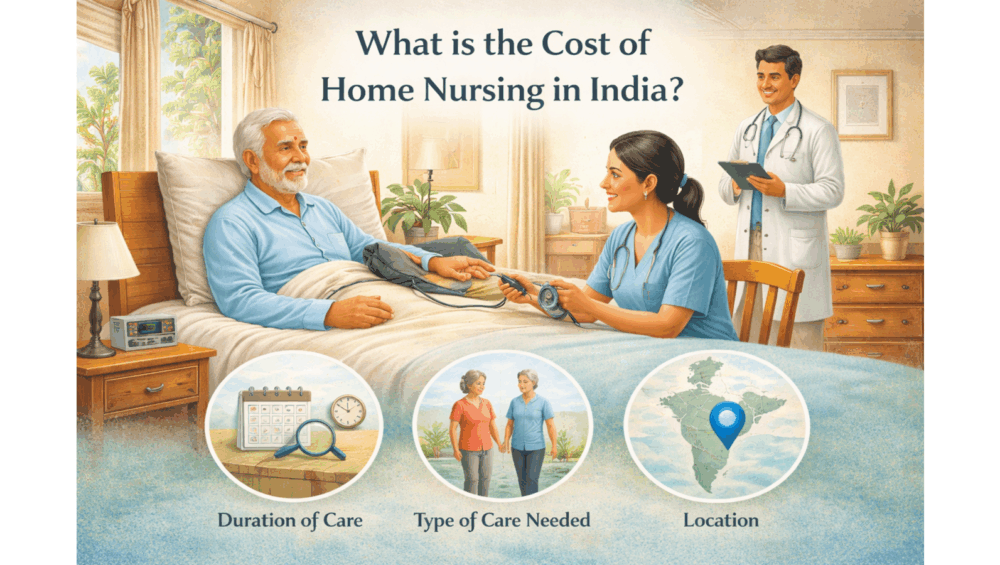
When evaluating the cost of home care services, families must consider multiple aspects. Below are the most common factors that influence pricing:
1. Type of Care Required
- Basic Care – Includes assistance with daily activities, feeding, mobility, and hygiene. This is generally more affordable.
- Medical Care – Involves specialized procedures like wound dressing, injections, or post-surgical monitoring. This comes at a higher rate.
- Critical Care – ICU-level support such as ventilator management or tracheostomy care requires highly trained professionals, increasing costs substantially.
2. Nurse’s Qualifications and Experience
- General Duty Assistant (GDA): Basic healthcare training, suited for personal support and monitoring.
- ANM/GNM Nurses (Auxiliary or General Nursing and Midwifery): Qualified nurses who can handle advanced medical procedures.
- B.Sc. Nurses or Critical Care Specialists: Provide ICU-level support at home and command the highest rates.
3. Duration of Service
- Hourly or short-term nursing is usually more expensive on a per-hour basis compared to long-term packages.
- Full-day or 24-hour services often come at discounted bundled rates but are overall costlier due to extended commitment.
4. Location
- Metro cities like Delhi, Mumbai, and Bengaluru typically have higher charges due to demand, cost of living, and availability of skilled professionals.
- Tier-2 and Tier-3 cities may offer more affordable rates but can face limited availability of qualified staff.
5. Additional Needs
- Special equipment like oxygen cylinders, monitors, or hospital beds at home add to overall expenses.
- Travel charges may also apply if the nurse is required to accompany patients for hospital visits.
Estimated Price Ranges (By Service Type)
While exact pricing depends on provider and location, here’s a realistic overview of home nursing rates in India:
1. Daily Charges (8–12 hours)
- General duty assistance: ₹650 – ₹1,100 per day
- Qualified nurses (GNM/ANM): ₹1000 – ₹1700 per day
- Specialized medical care: ₹1,500 – ₹3,000 per day
2. 24-Hour Home Nursing Charges
For 24-hour nursing care, it’s important to note that the total monthly cost typically ranges between ₹25,000 to ₹40,000, depending on the specific care needs and service providers. While we may not always have a breakdown of these charges, general estimates for various types of home nursing support are as follows:
General Caregivers: ₹18,000 – ₹25,000 per month
Qualified Nurses: ₹25,000 – ₹45,000 per month
ICU-Trained Specialists: ₹40,000 – ₹70,000+ per month
This type of care is especially suitable for elderly individuals or patients who require continuous monitoring and support at home.
3. Service-Specific Home Healthcare
We also offer a range of specialized home healthcare services tailored to specific medical needs. These include:
Clinical Nursing Services – For patients requiring medical assistance such as wound care, injections, or medication management.
Allied Health Services – Including speech therapy, physiotherapy, and occupational therapy.
Post-Operative Care – Personalized care plans to support recovery following surgery, tailored to the type and complexity of the procedure.
Elderly Care – Long-term support focused on improving quality of life, mobility, and daily functioning for seniors.
ICU-Level Care at Home – For patients needing advanced respiratory or tracheostomy support, delivered by highly trained professionals.
Palliative and End-of-Life Care – Compassionate, dignified care focusing on comfort, pain management, and emotional support for both patients and families.
Professional Guidance and Reliable Support
Monitoring done by office staffs , maintain quality service For families, choosing the right care plan often goes beyond numbers, it’s about balancing affordability with the safety and dignity of loved ones. Many times, families start with a caretaker but later realize that specialized medical care is essential.
This is where organizations like CFYI (Care For You India) play a critical role. By evaluating patient needs, they match families with the right professionals whether it’s a general duty assistant for basic care or a trained nurse for advanced support. Their structured approach ensures transparency in pricing and peace of mind in care delivery.
Conclusion
The home nursing cost in India depends on several factors such as the type of service, level of medical involvement, and duration. Families should carefully assess their loved one’s health needs before committing to a plan. While hourly or short-term care works for temporary recovery, long-term or 24-hour packages are more suitable for chronic illnesses and elderly care.
With rising healthcare expenses, opting for home nursing is often more cost-effective than prolonged hospital stays without compromising on quality. Organizations like CFYI make this decision easier by offering personalized and professional services right at home.
FAQs
- How much does 24-hour home nursing cost in India?
On average, 24-hour home nursing charges range from ₹18,000 to ₹70,000 per month, depending on whether you need basic support or ICU-level care. - Is home nursing more affordable than hospital care?
Yes. While hospital stays can cost several lakhs per month, home nursing offers significant savings while keeping patients in a comfortable environment. - Does home nursing include medical equipment?
Not always. Equipment such as hospital beds, oxygen concentrators, or monitors are usually charged separately by service providers.