

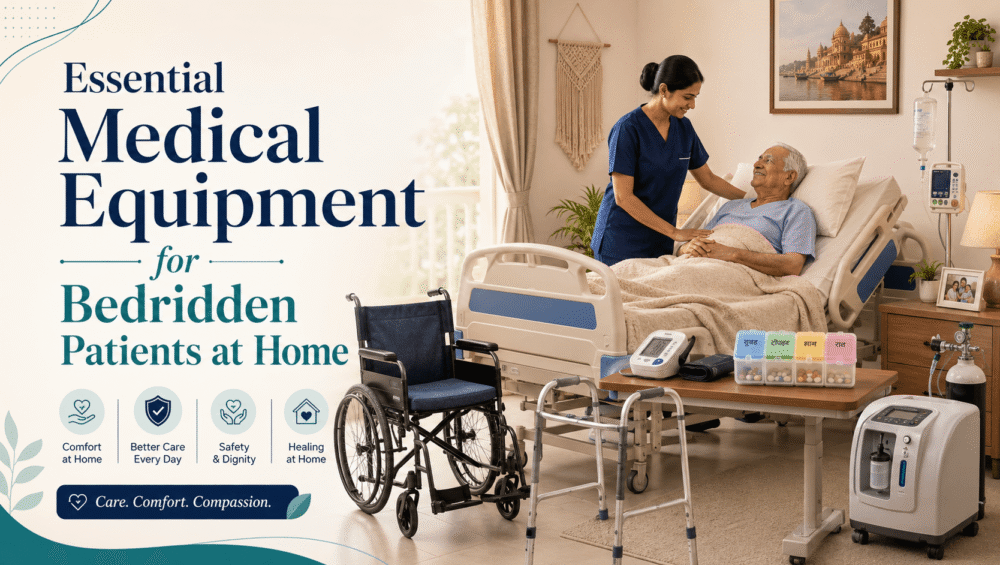
Caring for a bedridden loved one at home can be physically and emotionally demanding. Whether someone is recovering after surgery, living with a chronic illness, or needs long-term support, having the right medical equipment for bedridden patients can improve comfort, safety, and quality of life. Proper equipment also makes caregiving easier and helps reduce complications such as infections, falls, and bedsores.
With the growing demand for home medical equipment for patients in India, families today have access to both rental and purchase options through hospitals, online platforms, and Home Care Services in Mumbai and other cities.
Why Bedridden Patients Need the Right Medical Equipment at Home
Using suitable equipment at home is important because it helps:
- Improve patient comfort and daily convenience
- Reduce the risk of bedsores and infections
- Make caregiving safer and less physically exhausting
- Support hygiene, dignity, and independence
- Help manage recovery or long-term care at home
According to the World Health Organization India, long-term home-based care is becoming increasingly important for elderly and chronically ill patients in India.
How to Decide What Equipment a Bedridden Patient Needs
Before purchasing any medical equipment home setup, families should carefully assess the patient’s condition.
Things to consider include:
- The patient’s medical diagnosis and mobility level
- Whether care is temporary or permanent
- The amount of caregiver assistance required
- Space available at home for equipment
- Doctor or nurse recommendations before buying
Some equipment may only be needed short term, making rental a better option.
Essential Medical Equipment for Bedridden Patients at Home
Bed and Positioning Equipment
These items improve comfort and prevent pressure injuries:
- Hospital bed
- Adjustable backrest
- Pressure relief mattress or air mattress
- Bed rails or side support rails
- Patient repositioning sheet
- Bed rope ladder or lifting aid
A hospital bed with adjustable height and reclining support is often the most useful investment for long-term patients.
Hygiene and Toilet Support Equipment
Maintaining hygiene is critical for bedridden patients.
Commonly used items include:
- Bedpan
- Urine pot or urinal
- Adult diapers
- Disposable underpads or bed protectors
- Wet wipes, cotton, and hygiene supplies
- Bedside commode chair
These products help maintain cleanliness while preserving the patient’s dignity.
Mobility and Transfer Equipment
Even bedridden patients may require assisted movement for therapy or bathroom visits.
Helpful mobility aids include:
- Wheelchair
- Walker
- Transfer belt
- Patient lifting aid
- Non-slip footwear
These tools reduce strain on caregivers and lower the risk of falls.
Feeding and Daily Care Equipment
Daily care becomes easier with supportive accessories such as:
- Overbed food table
- Feeding cup or sipper bottle
- Easy-grip utensils
- Bibs or clothing protectors
- Water bottle with straw
These small additions improve convenience during meals and hydration.
Health Monitoring Equipment
Basic monitoring devices help families track vital health indicators at home.
Important devices include:
- Digital thermometer
- Blood pressure monitor
- Pulse oximeter
- Glucometer for diabetic patients
- Weighing scale, if advised
Monitoring equipment allows early detection of health complications.
Respiratory and Medical Support Equipment
Some patients may require advanced medical support equipment prescribed by doctors.
These may include:
- Oxygen concentrator
- Nebulizer
- Suction machine
- IV stand
- Catheter care supplies
Equipment like oxygen concentrators and suction machines should only be used under medical guidance.
Safety Equipment for Bedridden Patients at Home
Safety measures are essential to prevent accidents and emergencies.
Recommended items include:
- Bed rails
- Non-slip mats
- Night lights
- Emergency call bell or alert system
- Proper medicine storage units
Simple safety improvements can significantly reduce risks at home.
Equipment to Prevent Bedsores and Infections
Bedridden patients are highly vulnerable to pressure sores and infections.
Preventive equipment includes:
- Air mattress or pressure relief mattress
- Repositioning sheet
- Disposable underpads
- Skin barrier creams, if advised
- Gloves and hygiene supplies
According to HelpAge India, proper hygiene and regular repositioning are essential for elderly patients receiving home care.
What Equipment Should Be Prescribed by a Doctor?
Certain medical devices should never be purchased without professional consultation.
These include:
- Oxygen concentrator
- Ventilator or breathing support devices
- Suction machine
- Feeding tube supplies
- Catheter-related equipment
- IV stands and infusion systems
A healthcare professional can guide families on safe usage and maintenance.
Should You Buy or Rent Medical Equipment?
Families often wonder whether buying or renting is the better choice.
Buying Makes Sense When:
- Equipment is needed long term
- Daily use is expected
- Frequent replacements are unlikely
Renting Is Better When:
- Recovery is temporary
- Equipment is expensive
- Storage space is limited
Before deciding, check:
- Rental terms and deposits
- Maintenance support
- Installation and caregiver training
- Cleaning and replacement policies
Many Home Care Services in Mumbai also help arrange rented equipment for families.
Where to Get Medical Equipment for Bedridden Patients at Home in India
Families can obtain home medical equipment for patients through:
- Home healthcare service providers
- Medical equipment rental companies
- Local surgical supply stores
- Hospital discharge support teams
- Online medical equipment platforms
- Doctor or nurse recommendations
Some care providers also offer trained attendants alongside equipment support, making home recovery more manageable.
Checklist Before Buying or Renting Equipment
Before finalizing any equipment, ask:
- Is it suitable for the patient’s condition?
- Will it fit comfortably in the room?
- Is installation included?
- Is caregiver training provided?
- Is maintenance support available?
- Are replacement policies clear?
Careful planning can prevent unnecessary expenses and inconvenience.
Common Mistakes Families Should Avoid
Families often make avoidable mistakes during home care setup.
Common examples include:
- Buying equipment without medical advice
- Choosing low-quality products only to save money
- Ignoring room space and accessibility
- Not learning proper equipment usage
- Neglecting cleaning and maintenance
- Depending only on equipment without trained caregiving support
When Equipment Alone Is Not Enough
In many cases, patients need more than just equipment.
Professional caregiving support may be required when:
- The patient needs regular turning and repositioning
- Hygiene care becomes difficult for family members
- Medicines and feeding need supervision
- The caregiver experiences exhaustion or burnout
- Skilled nursing support is necessary
In such situations, providers like CFYI can help families arrange trained home attendants and patient care assistance.
Final Thoughts
Setting up the right medical equipment home environment can make a major difference in the comfort, safety, and recovery of bedridden patients. From hospital beds and hygiene products to monitoring devices and mobility aids, every item plays an important role in home care.
As more Indian families choose home-based recovery and elder care, access to reliable medical equipment for bedridden patients and trained caregiving support is becoming increasingly important. Professional services can help families manage both equipment and daily care with greater confidence and peace of mind.
FAQs
- What equipment is needed for a bedridden patient at home?
Common essentials include a hospital bed, air mattress, wheelchair, bedpan, adult diapers, pulse oximeter, and hygiene supplies.
- Which bed is best for a bedridden patient?
An adjustable hospital bed with side rails and pressure relief support is usually the best option.
- Is an air mattress necessary for bedridden patients?
Yes, air mattresses help reduce pressure on the skin and lower the risk of bedsores.
- Should I buy or rent a hospital bed at home?
Renting is better for short-term recovery, while buying is more practical for long-term care.
- What health monitoring devices should be kept at home?
A thermometer, blood pressure monitor, pulse oximeter, and glucometer are commonly recommended.
- Can oxygen equipment be used without a doctor’s advice?
No. Oxygen concentrators and respiratory equipment should only be used under medical supervision.
- Where can families rent medical equipment in India?
Medical equipment rental companies, hospitals, and home healthcare providers across India offer rental services.
- When should families hire a trained caregiver or nurse?
Professional support is helpful when patients require regular monitoring, hygiene care, feeding assistance, or mobility support.
References
- Shri Manjunatha Home Nursing – “Daily Checklist for Bedridden Patient Care”
https://shrimanjunathahomenursing.com/daily-checklist-bedridden-patient-care/
Provides a practical daily care checklist for bedridden patients, including hygiene routines, repositioning schedules, medication tracking, feeding support, and infection prevention measures for home caregivers.
- Care24 – “Equipment for Bedridden Patients”
https://care24.co.in/blog/equipment-for-bedridden-patients
Covers essential medical equipment for bedridden patients, including hospital beds, wheelchairs, air mattresses, hygiene supplies, and mobility aids commonly used in Indian homes.
- Practo – “Taking Care of Our Elderly Patients”
https://www.practo.com/healthfeed/taking-care-of-our-elderly-patients-22196/post
Explains practical caregiving needs for elderly and bedridden patients, including hygiene care, mobility assistance, and health monitoring at home.