

Why Nutrition Matters for Elderly Patients
Nutritional needs change as people age
When your loved one ages, they undergo alot of changes not just emotionally but physically as well their nutrition absorption process by their bodies slow downs. Not just that but their regular rate of metabolism also reduces, muscle mass decreases, and bones become more and more fragile. which is why a thoughtful senior diet plan becomes essential rather than optional. What worked in someone’s 40s or 50s often needs a rethink by their 70s.
Seniors may have lower appetite but higher nutrient needs
The appetite of the elderly reduces too, there might be other reason for reduction in food intake that includes dental issues, or side effects of some medication, but this doesn’t help with their nutrients intake.This gap between low intake and high requirement is exactly why structured meal plans for seniors matter so much in Indian households.
What Should a Healthy Diet for Elderly Patients Include?
- Protein to support muscle strength and prevent age-related muscle loss (sarcopenia)
- Fibre for digestion and bowel health, especially since constipation is common in older adults
- Calcium and vitamin D for bone health and to reduce fracture risk
- Healthy fats like ghee in moderation, nuts, and seeds for overall wellbeing
- Fruits and vegetables for vitamins, minerals, and antioxidants
- Adequate fluids to prevent dehydration, since thirst sensation reduces with age
- Whole grains and other nutrient-dense carbohydrates for sustained energy
How to Plan Meals for Elderly Patients in India
- Choose familiar Indian foods that seniors already enjoy and recognise
- Keep meals soft, easy to chew, and easy to digest when needed
- Use smaller, more frequent portions if appetite is low
- Balance protein, vegetables, grains, and healthy fats in every meal
- Reduce excess salt, sugar, and highly processed foods
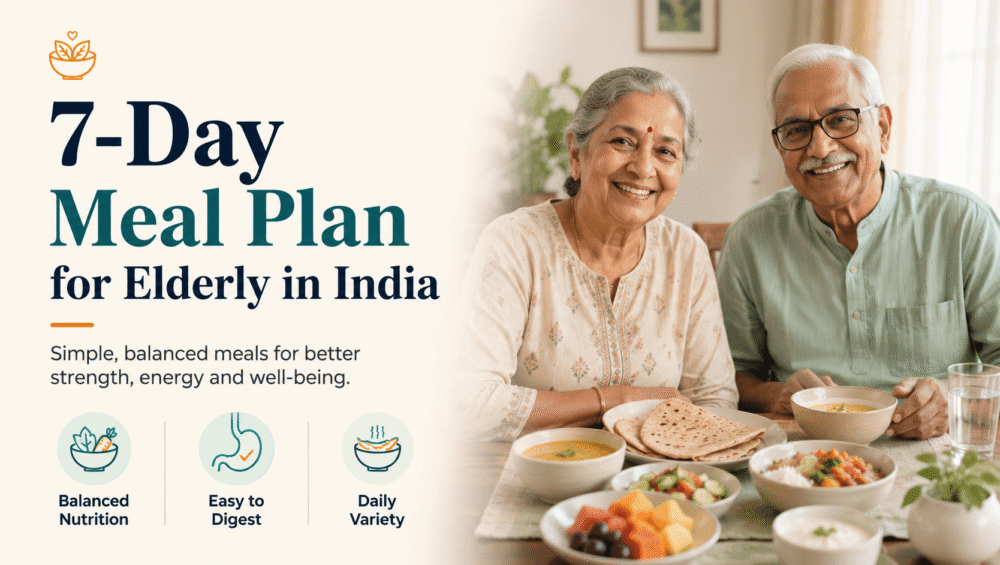
7-Day Meal Plan for Elderly Patients in India
Day 1 – Balanced and Protein-Rich Meals Breakfast: Moong dal cheela + curd | Mid-morning: Seasonal fruit | Lunch: Roti + lauki chana dal + vegetable + curd | Evening: Unsalted nuts | Dinner: Vegetable dalia + sautéed vegetables
Day 2 – Fibre and Calcium-Focused Meals Breakfast: Vegetable oats/besan chilla + curd | Mid-morning: Papaya | Lunch: Bajra/multigrain roti + palak paneer + vegetable | Evening: Buttermilk | Dinner: Moong khichdi + cooked vegetables
Day 3 – Easy-to-Digest Indian Meals Breakfast: Vegetable poha + curd | Mid-morning: Banana | Lunch: Rice + moong dal + cooked vegetables | Evening: Roasted makhana | Dinner: Vegetable soup + soft roti/dalia
Day 4 – Protein and Vegetable Variety Breakfast: Idli + vegetable sambar | Mid-morning: Fruit | Lunch: Roti + dal + bhindi/lauki + curd | Evening: Buttermilk | Dinner: Vegetable khichdi + cooked vegetables
Day 5 – Soft and Senior-Friendly Meals Breakfast: Ragi porridge/upma + fruit | Mid-morning: Curd or buttermilk | Lunch: Soft roti + moong dal + seasonal vegetable | Evening: Makhana or fruit | Dinner: Dalia/vegetable soup + paneer/tofu
Day 6 – Traditional Indian Balanced Meals Breakfast: Vegetable upma + curd | Mid-morning: Seasonal fruit | Lunch: Rice/roti + rajma/chana + vegetable | Evening: Nuts/seeds or buttermilk | Dinner: Moong dal khichdi + cooked vegetables
Day 7 – Light and Nutrient-Dense Meals Breakfast: Besan chilla + curd | Mid-morning: Seasonal fruit | Lunch: Roti + dal + mixed vegetable + curd | Evening: Light snack + herbal beverage | Dinner: Vegetable dalia/khichdi + cooked vegetables
This weekly rotation gives families a ready elderly diet plan that doesn’t feel repetitive, while still keeping every meal soft, home-style, and easy to prepare.
Common Mistakes to Avoid When Planning Meals for Elderly Patients
- Focusing only on calories instead of nutrient quality
- Giving too little protein
- Serving large portions when appetite is already low
- Using excessive salt or sugar to improve taste
- Ignoring chewing and swallowing difficulties
- Repeating the same meals every single day
- Changing a medically prescribed diet without professional advice
Final Thoughts
You don’t need to look through complex cookbook recipes just to fulfill the nutrient needs of the elderly, you require consistency, softness and balance. A meal plan for 7 days should be something that can be consistently made and followed without disruptions. Small, steady changes: more protein, more fibre, less salt go a long way in improving quality of life.
For families who are taking care of their loved ones along with their regular work, it can be really hectic to be consistent with the schedules and diet so to ease this there is alway professional support available. CFYI (Care For You India) works with caregivers and nutrition-conscious meal support for seniors, helping families implement diet plans consistently rather than leaving it to guesswork. If you’re looking for reliable, personalised at-home senior care, reach out to CFYI to explore how they can support your family’s routine.
FAQs
What is the best food for elderly patients in India? Soft, home-cooked meals like khichdi, dal-roti, curd, and cooked vegetables that are easy to digest and rich in protein and fibre.
What should a 70-year-old eat in a day? A mix of protein (dal, paneer, curd), whole grains, vegetables, fruit, and adequate fluids spread across 4–5 small meals.
How much protein does an elderly person need? Generally around 1–1.2 grams per kg of body weight daily, though a doctor or dietitian should confirm this based on individual health conditions.
What are easy-to-digest foods for elderly patients? Khichdi, dalia, moong dal, soft roti, curd, and well-cooked vegetables are gentle on digestion.
Which Indian foods are good for senior citizens? Ragi, bajra, moong dal, seasonal fruits, curd, and leafy greens are all excellent, India-friendly choices.
What should elderly patients avoid eating? Excess salt, fried and processed foods, sugary items, and very large portions that strain digestion.