

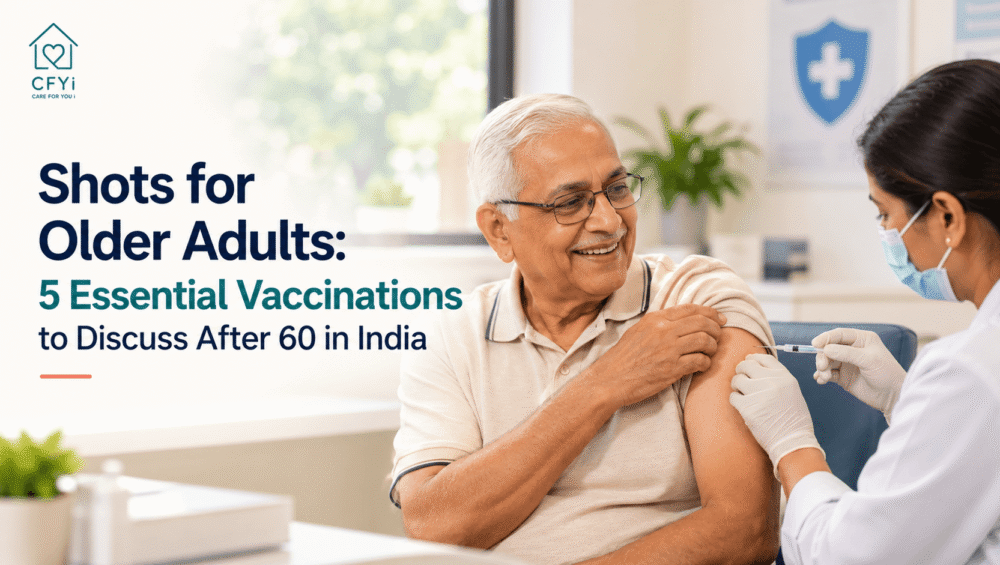
Most Indian families keep a careful record of a baby’s vaccines. Ask the same family when Papa last had a flu shot, though, and you’ll usually get a blank look. That’s not unusual. Data from the Longitudinal Ageing Study in India (LASI), analysed by the Observer Research Foundation, shows that just 1.5% of adults over 45 had ever taken a flu vaccine. For the pneumonia vaccine, the figure was 0.6%.
That gap matters, because the illnesses these vaccines prevent tend to hit hardest after 60. Below, we walk through the shots for older adults worth raising at the next doctor’s visit. Treat this as a starting point for that conversation, not a replacement for it.
Why Vaccination Matters More as We Age
As we get older, the immune system slows down. It takes longer to spot an infection and longer to fight it off. A cough that a 30-year-old gets over in a week can, in a 70-year-old, turn into pneumonia and a hospital stay.
Long-term illnesses add to the risk. According to LASI, released by the Ministry of Health & Family Welfare, three out of four Indians over 60 live with at least one chronic disease, like diabetes, hypertension or heart trouble. Each of these can make an infection harder to handle.
No two seniors are alike, of course. What your mother needs will depend on her health today and the vaccines she has already had.
Vaccination Schedule at a Glance for Adults 60+
The table below gives a rough picture only. Your doctor may change the order, the timing or the vaccine itself, depending on your parent’s health.
| Vaccine | Why it may be recommended | Typical timing | Who should discuss it with a doctor |
| Influenza | Reduces risk of severe flu and complications | Once a year, before flu season | All adults 60+ |
| Pneumococcal | Protects against pneumonia, bloodstream infection and meningitis | One or more doses, based on vaccine type and past doses | All adults 60+, especially those with chronic illness |
| Shingles (recombinant) | Prevents shingles and long-lasting nerve pain | Two doses, 2–6 months apart | Adults 50+ |
| Td/Tdap | Protects against tetanus, diphtheria and whooping cough | Booster about every 10 years, or after certain wounds | Anyone unsure of their last booster |
| COVID-19 | Lowers risk of severe illness | As per current government guidance | All seniors, especially those with health conditions |
5 Important Shots for Older Adults to Discuss With a Doctor
1. Influenza vaccine
Flu viruses keep changing, which is why the vaccine is updated every year and one shot doesn’t last a lifetime. The Association of Physicians of India (API) advises a yearly flu shot for everyone over 50. Flu season isn’t the same across India, either. In the north it tends to peak in winter, while much of the south sees more cases around the monsoon, so ask your doctor which month suits your city.
2. Pneumococcal vaccine
Pneumococcal bacteria are behind a large share of pneumonia in older people, and they can also cause meningitis or blood infections. A few different vaccines are available now. Some, like PCV20, are a single dose; others are given as a pair. The right one depends on age, existing conditions and whether a dose was taken earlier.
3. Shingles vaccine
Anyone who had chickenpox as a child still carries the virus. It stays quiet for decades, then can wake up as immunity dips, causing a painful, blistering rash. For some people the nerve pain lingers for months after the rash clears. API now recommends the recombinant shingles vaccine for adults aged 50 and above. It’s normally given in two doses, two to six months apart, but your doctor will set the dates.
4. Tdap or Td booster
This one covers tetanus, diphtheria and pertussis (whooping cough). Plenty of elders last got a tetanus shot after a fall or a cut years ago and can’t recall when. A booster is usually suggested about once every 10 years, so it’s worth digging out old records or simply asking the doctor.
5. COVID-19 vaccination
Seniors are still more likely to get seriously ill from COVID-19. Advice on extra doses has changed several times since 2021 and will probably change again. Go by what the Government of India and your doctor recommend today.
Other Vaccines That May Be Recommended Based on Risk or History
Depending on health and history, the doctor may also bring up:
- Hepatitis B, particularly for people with diabetes or kidney disease who aren’t already protected
- Hepatitis A, if there’s liver disease or a specific exposure risk
- MMR or varicella (chickenpox), for adults who lack immunity, when clinically appropriate
- Travel vaccines, say before a trip abroad or a pilgrimage like Hajj or Umrah
Vaccination for Older Adults With Chronic Health Conditions
Older adults with a long-term illness often gain the most from vaccines. They also need the most careful planning.
- Diabetes raises the chances of severe flu, pneumonia and hepatitis B.
- With heart or lung disease, even a mild infection can push heart failure, COPD or asthma out of control.
- Kidney or liver disease may call for extra vaccines or a different schedule.
- During cancer treatment or other immune-suppressing therapy, some vaccines (live ones especially) may be off the table for a while, and timing becomes important.
The treating doctor sees the whole picture, which makes them the right person to decide what’s given and when.
When to Speak to a Doctor Before Getting Vaccinated
It’s best to check with a doctor first if your parent:
- has ever had a serious allergic reaction to a vaccine or one of its ingredients
- is unwell right now with a fever or a moderate-to-severe illness
- takes immunosuppressive medicines or has a complex medical condition
- has no clear record of past vaccines
- was recently in hospital or had surgery
How Older Adults Can Prepare for a Vaccination Appointment
A little preparation makes the visit smoother:
- Bring the list of medicines they currently take.
- Carry old vaccination cards or prescriptions, if you can find them.
- Mention any allergies and health conditions.
- Ask if two vaccines can be given on the same day.
- Before leaving, find out which side effects are normal and which need a call to the doctor.
Keep an Updated Vaccination Record
It doesn’t need to be fancy. A page in a diary or a photo saved on the phone does the job. Write down the vaccine name and the date, note when the next dose or review is due, and share a copy with the family doctor and whoever helps look after your parent.
Final Thoughts
Getting the right shots for older adults can mean fewer hospital visits and more years of living independently. For many families, though, the vaccine isn’t the hard part. The hard part is remembering the due date, getting to the clinic, and having someone around if a fever shows up the next day.
That’s where CFYI (Care For You India) comes in. Our caregivers support seniors at home, so practical hurdles like these don’t stand between them and the care they need.
Takeaway: Home-based care is in growing demand across India, and CFYI wants to make it easier to access, whether it’s for an ageing parent, a divyang family member or someone recovering after a hospital stay. If you’d like a hand, get in touch with CFYI for personalised, professional care at home.
FAQs
1. Which vaccinations are recommended for adults over 60 in India?
The main ones to talk about are flu, pneumococcal, shingles, Td/Tdap and COVID-19. Hepatitis B and a few others may be added depending on health.
2. Do older adults need a flu shot every year?
Yes. The flu virus changes from year to year, so last year’s shot won’t fully cover this year’s strains.
3. How often is the pneumonia vaccine needed for seniors?
That depends on which vaccine is used. Some are a single shot; others come as two doses. The doctor will check what’s been given before.
4. Should adults over 60 get the shingles vaccine?
In most cases, yes. Indian guidelines recommend it from age 50, usually as two doses a few months apart.
5. Do older adults need a tetanus booster?
Usually, yes: roughly once every 10 years, and sometimes sooner after a deep or dirty wound.
6. Can multiple vaccines be given at the same appointment? Often they can. Your doctor will confirm, based on the vaccines and your parent’s health.
7. Are vaccines safe for older adults with diabetes or heart disease?
For most people, yes, and these are the seniors who tend to benefit most. Still, let the treating doctor review the plan.
8. What should I do if my parent has no vaccination records?
Don’t worry, it’s very common. The doctor will generally assume the doses weren’t given and plan a safe catch-up.