

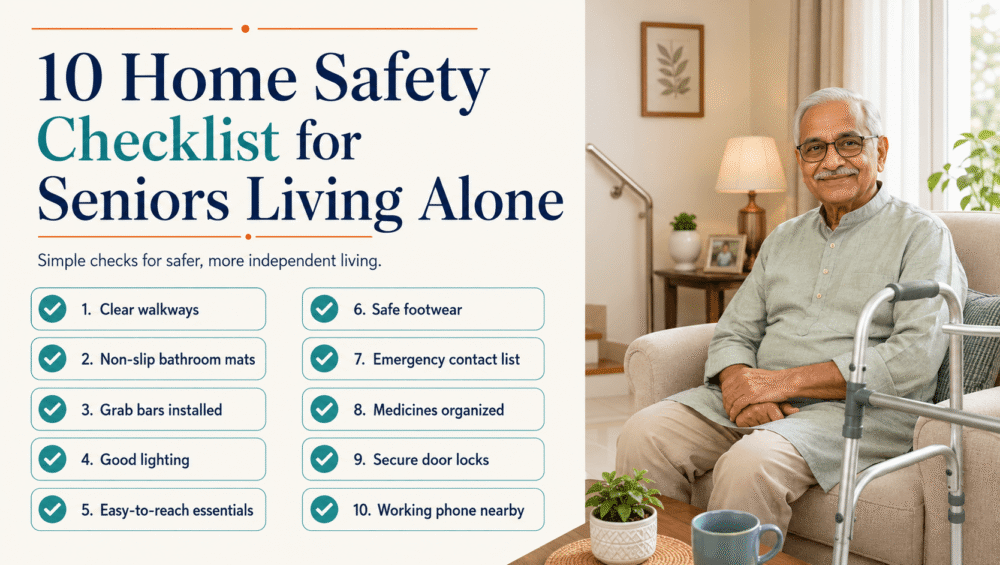
Introduction
Older adults who live alone often get used to being a little more self-sufficient and secure with their own surroundings. But that doesn’t mean that there are no risks; just because the surroundings are familiar and limiting the independence isn’t something that would decrease the risks. It’s about co-creating an environment where independence and confidence go hand in hand.
A home that is structured well and has a planned environment can really reduce risks like accidents, and in case of emergency, the right measures can be taken in time. This guide offers practical, India-relevant senior home safety tips to help families and caregivers create a secure living space.
Why Home Safety Matters for Seniors Living Alone
- Higher risk of falls and injuries: Falls are one of the leading causes of hospitalization among elderly Indians.
- Slower recovery: Healing takes longer with age, increasing complications.
- Reduced balance and eyesight: Everyday objects can become hazards.
- Need for quick emergency response: Immediate help can be life-saving.
- Supports independent living: A safer home reduces dependency on others.
The Complete Home Safety Checklist
1. Entrance and Hallway Safety
- Install bright lighting near the entrance
- Remove clutter and obstacles near doors
- Add sturdy handrails for steps
- Use non-slip entry mats
- Keep keys and phone easily accessible
2. Living Room Safety
- Remove loose rugs to prevent tripping
- Keep walkways clear of furniture
- Secure or tape down electrical wires
- Use stable, non-wobbly furniture
- Keep frequently used items within reach
3. Bedroom Safety
- Maintain a comfortable bed height for easy access
- Place a lamp within arm’s reach
- Keep an emergency phone nearby
- Remove loose carpets or rugs
- Install night lights for better visibility at night
4. Bathroom Safety
- Install grab bars near toilets and showers
- Use anti-slip mats inside and outside the shower
- Add a shower chair if standing is difficult
- Keep toiletries within easy reach
- Ensure proper ventilation and bright lighting
Bathrooms are one of the most critical areas for fall prevention at home for elderly.
5. Kitchen Safety
- Store frequently used items at waist level
- Avoid climbing stools or ladders
- Regularly check gas connections and appliances
- Keep a fire extinguisher accessible
- Avoid loose clothing while cooking
6. Staircase Safety
- Install sturdy handrails on both sides
- Add anti-slip strips on steps
- Improve lighting along the staircase
- Keep stairs clutter-free
- Mark step edges clearly for visibility
7. Electrical and Fire Safety
- Install smoke detectors in key areas
- Replace batteries regularly
- Avoid overloading electrical sockets
- Repair damaged wires immediately
- Display emergency contact numbers clearly
8. Medication and Medical Safety
- Organize medicines using pill boxes
- Follow a strict medication schedule
- Store prescriptions together
- Keep medical records easily accessible
- Set alarms or reminders for timely intake
9. Emergency Preparedness
- Display emergency numbers near the phone
- Keep a charged phone within reach at all times
- Use personal alarm or alert devices
- Inform neighbors or relatives about living arrangements
- Wear or carry a medical ID
10. Security and Fraud Protection
- Verify visitors before opening the door
- Avoid sharing personal or financial information
- Be cautious of unknown calls or messages
- Install door cameras or peepholes if possible
- Report suspicious activity immediately
Home Modifications That Improve Safety
Simple changes can significantly enhance safety:
- Install grab bars and railings
- Improve lighting across all rooms
- Use non-slip flooring materials
- Add motion-sensor lights
- Install smart doorbells for monitoring visitors
Professional support services like CFYI (Care For You India) can assist families in assessing homes and implementing these modifications effectively, especially for seniors who need ongoing supervision.
How Often to Review Home Safety
- Conduct monthly quick safety checks
- Do a full inspection every 3–6 months
- Reassess after any illness, fall, or hospitalization
- Update safety measures as mobility or health conditions change
Regular reviews ensure that the elderly home safety checklist remains relevant and effective over time.
Conclusion
Creating a safe home environment is one of the most important steps in ensuring that seniors can live independently with confidence and dignity. Small adjustments—from better lighting to organized medication—can make a significant difference in preventing accidents and improving quality of life.
With rising demand for reliable home care services surat and across India, professional support is becoming essential. CFYI is committed to making senior care safer and more accessible—whether it’s through home safety assessments or trained caregivers. Reach out today to explore personalized care solutions designed for your loved ones.
FAQs
1. What are the most important home safety changes for seniors?
The most critical changes include installing grab bars, improving lighting, removing tripping hazards, and ensuring easy access to emergency contacts and devices.
2. How can bathrooms be made safer for seniors?
Bathrooms can be made safer by using anti-slip mats, installing grab bars, adding a shower chair, and ensuring adequate lighting and ventilation.
3. How often should a home safety review be done?
A quick check should be done monthly, while a detailed inspection is recommended every 3–6 months or after any health change.
4. Should seniors living alone use emergency alert systems?
Yes, emergency alert systems provide immediate assistance during falls or medical emergencies, offering peace of mind for both seniors and their families.
References
- National Medical Journal of India – Falls Among Elderly
- HelpAge India – Research Reports on Elderly Care
https://www.who.int/india/health-topics/ageing?utm_source
- WHO India – Ageing and Health